
| Verified against primary record | |
| Waiting for tests | 1,918,200 people waiting for one of 15 key diagnostic tests in England, March 2026[1] |
|---|---|
| Waiting six weeks or more | 406,900, being 21.2 per cent of that list[1] |
| College position | Whole body screening of asymptomatic people is not recommended[2] |
| Records read | Official waiting times report and two college statements, 30 September 2026 |
| Independently reported | |
| Radiation context | A scan of about 10 millisieverts is estimated to raise fatal cancer risk by about 1 in 2,000[3] |
| Bands apply only to the rows beneath them. The radiation figure is a model-derived projection from a page last updated in 2017, not an observed excess. | |
Diagnostic tourism is travel to obtain imaging, endoscopy or laboratory testing rather than treatment. It is driven mainly by waiting, and it shades at one edge into a commercial product that professional bodies do not recommend at all.
Waiting for a test
Diagnostic waiting is measured separately from treatment waiting in systems that publish it. In England in March 2026, 1,918,200 people were waiting at month end for one of 15 key diagnostic tests, of whom 406,900, being 21.2 per cent, had been waiting six weeks or more. In the same month 2,618,500 diagnostic tests were undertaken.[1]
The 15 tests cover three groups: imaging, comprising magnetic resonance imaging, computed tomography, non-obstetric ultrasound, barium enema and bone density scanning; physiological science, comprising audiology assessment, echocardiography, electrophysiology, peripheral neurophysiology, sleep studies and urodynamics; and endoscopy, comprising gastroscopy, colonoscopy, flexible sigmoidoscopy and cystoscopy.[4] The series has run monthly since January 2006.
A diagnostic test is a plausible thing to travel for, because unlike an operation it is a single episode with no follow-up requirement and a portable result. What is not established is how many people do so: no source located counts travel for diagnostic testing.
The scan sold to people with no symptoms
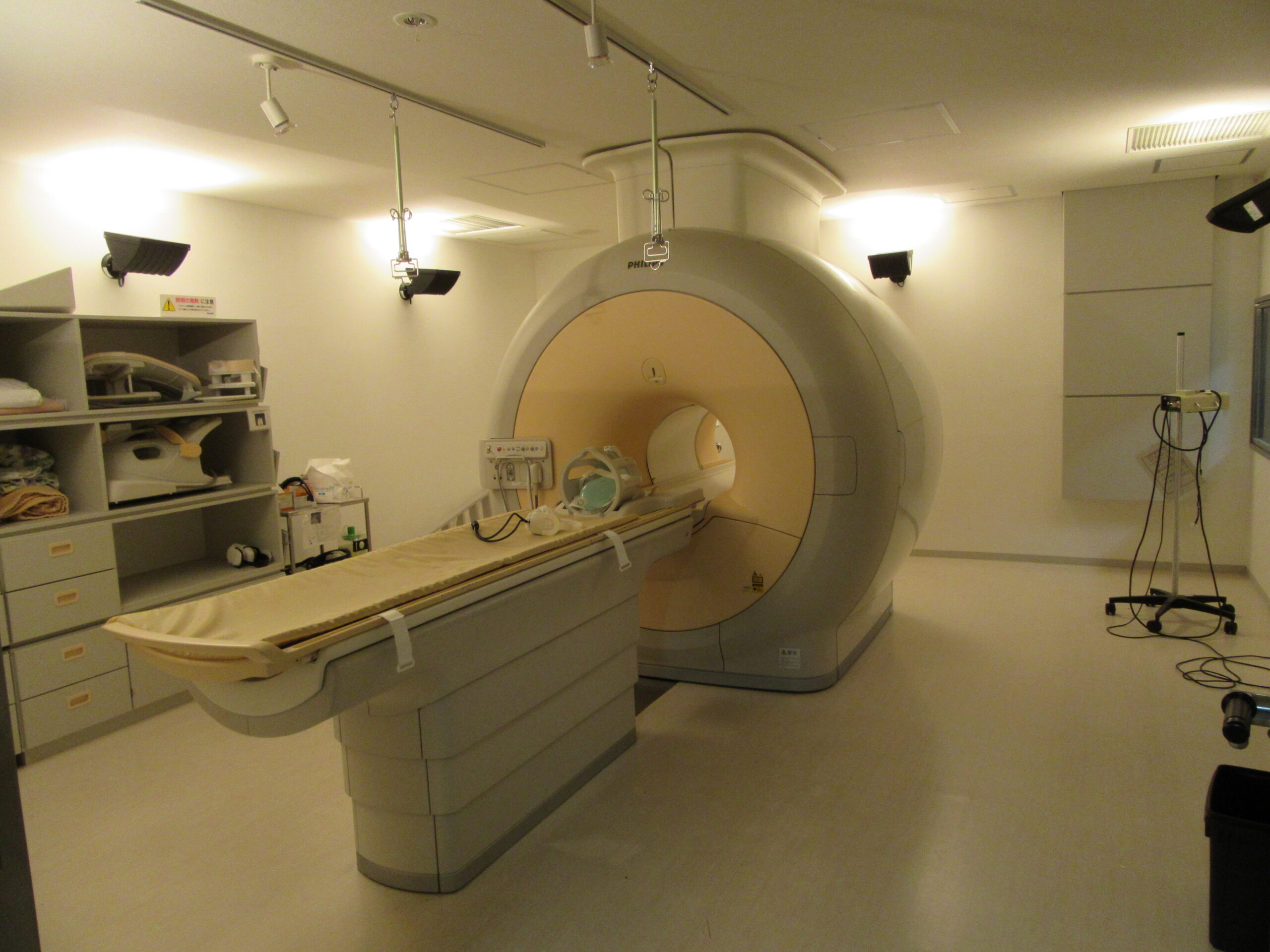
At the commercial end of this sector sits whole body imaging marketed directly to consumers. Two radiology colleges have published positions on it, and both are negative.
The Australian and New Zealand college states that it does not recommend performing whole body magnetic resonance screening in asymptomatic patients who do not have a previously diagnosed malignancy or a cancer predisposition syndrome; that there is currently no evidence demonstrating significant improvement in health outcomes from doing so; and that no study has rigorously investigated the impact on disease-specific survival in asymptomatic people without specific risk factors. It adds that incidental findings can lead to significant and unnecessary anxiety, further investigation including biopsy and substantial downstream healthcare costs, a large proportion of such findings being benign, and that false reassurance from such a scan has the potential for significant negative health outcomes.[2]
Its British counterpart, in a statement issued to a newspaper, said that it recommends body scanning only to investigate symptoms of disease and only under the direction of a doctor, that it does not recommend an elective scan in the absence of symptoms, that there is a chance of overdiagnosis and treatment of irregularities that turn out to be harmless, and that doing more of these scans would increase pressure on a health service already tackling a backlog.[5] That statement is a media comment rather than a formal position paper and carries no references; the Australian and New Zealand document is the stronger citation for a college position.
Dose, where imaging uses radiation
Magnetic resonance imaging uses no ionising radiation; computed tomography does. The United States regulator gives typical effective doses of about 2 millisieverts for a head scan, 7 for a chest scan, 8 for an abdominal scan and 16 for a coronary angiogram, with diagnostic procedures typically estimated in the range of 1 to 10 millisieverts and individual doses potentially two or three times larger or smaller. It estimates that an examination delivering 10 millisieverts may be associated with an increase in the possibility of fatal cancer of approximately 1 chance in 2,000, against a background lifetime risk of roughly 1 in 5. It also identifies incidental findings, leading to unneeded and possibly invasive follow-up tests, as a primary risk of imaging, and notes that among children undergoing such scans approximately one third have had at least three.[3]
That risk estimate is a model-derived projection rather than a measured excess of cancers, and the page carries a last update of 5 December 2017.
See also
- Health screening abroad, the closely related product and the criteria a real programme must meet
- Medical travel and waiting lists, the main driver of this travel
- Medical travel for rare diseases, where the diagnostic question is the whole problem
- Medical travel coordination, for getting results back to a treating clinician
References
- NHS England. Diagnostic Waiting Times and Activity Report, March 2026. Accredited official statistics. Verified against primary record: official statistics report opened and read. Retrieved 30 September 2026.
- Royal Australian and New Zealand College of Radiologists. Whole Body MRI Screening in Low-Risk Patients: position statement. Version 1.1, approved 4 July 2025. Verified against primary record: college position statement opened and read. Retrieved 30 September 2026.
- United States Food and Drug Administration. What are the Radiation Risks from CT? Page last updated 5 December 2017. Verified against primary record: regulator page opened and read. The risk estimate is model-derived. Retrieved 30 September 2026.
- NHS England. Monthly Diagnostics Waiting Times and Activity. Verified against primary record: official statistics collection page opened and read. Retrieved 30 September 2026.
- Royal College of Radiologists. RCR statement on elective MRI health screening. 12 June 2025. Verified against primary record: the college’s own published statement, issued as a media comment rather than a position paper. Retrieved 30 September 2026.
Sourcing note: the waiting times report, the two college statements and the radiation page were opened and read on 30 September 2026. March 2026 is the most recent month verified; later collections exist and were not read. The British college statement is identified as a media comment rather than a formal position paper, because the two carry different weight. The radiation risk figure is labelled as a model-derived projection from a page last updated in 2017. No figure is given for travel for diagnostic testing, because none was located.