
| Verified against primary record | |
| Its statistical position | Surgical procedures can be performed as in-patient cases, day cases or out-patient cases[1] |
|---|---|
| England’s test | Admitted electively, no hospital bed required overnight, returning home as scheduled[2] |
| A procedure-based definition | Procedures typically requiring an operating room, penetrating the skin, under anaesthesia or sedation[3] |
| Records read | Two statistics pages, two national data dictionary pages and a database overview, 9 October 2026 |
| Independently reported | |
| A sourcing warning | A website using the association’s acronym in its domain is not that association |
| Bands apply only to the rows beneath them. No day surgery rate is published here, because no official percentage was located. | |
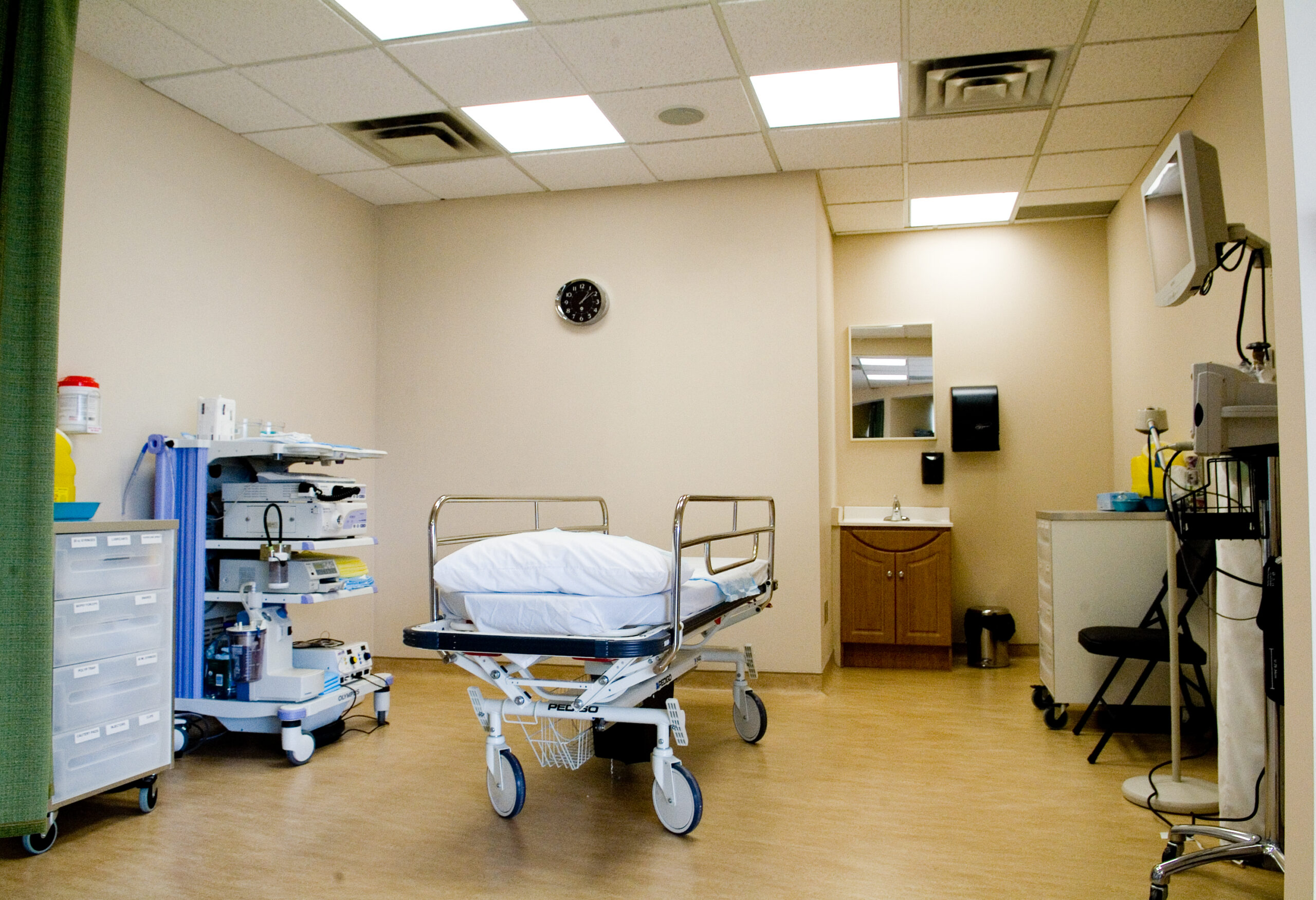
Day surgery, also called ambulatory surgery or same-day surgery, is an operation after which the patient goes home the same day. It is the commonest form of elective surgery in high-income systems and the form most medical travel involves, and it is not simply outpatient surgery: in the main European statistical framework it is a formally admitted third category, neither inpatient nor outpatient.
Neither inpatient nor outpatient
The direct answer to where day surgery sits is given by the statistical authority itself: surgical procedures can be performed as in-patient cases, day cases or out-patient cases.[1] Three categories, not two. The same article records that an in-patient or day care patient is discharged from hospital when formally released after a procedure or course of treatment, which confirms that a day case involves formal admission and discharge.
That is the distinction most often lost. A day case patient is admitted, occupies a formal episode, and is discharged, all within one day. An outpatient surgical case is not admitted at all. Which of the three a given operation counts as depends on the system, not on the surgery.
Two different axes of definition
England defines the category by the bed. A day case admission covers a patient admitted electively during the course of a day with the intention of receiving care, who does not require the use of a hospital bed overnight and who returns home as scheduled, with reclassification as an ordinary admission if the patient stays.[2]
An American sampling database defines ambulatory surgery by the nature of the procedure instead: therapeutic surgical procedures that typically require the use of an operating room, penetrate or break the skin, and involve regional anaesthesia, general anaesthesia, or sedation to control pain.[3] That is a procedure-type test keyed to a classification of surgical codes, which is a different axis entirely from a length-of-stay or bed-use test.
So two systems can both report day surgery while asking different questions: one asks whether a bed was occupied overnight, the other asks whether the procedure was of a surgical type. A figure from one is not comparable with a figure from the other.
The 23-hour question
Medical travel frequently involves overnight observation after a procedure planned as a day case, which raises the question of where a stay of roughly a day falls. No official text using the phrase 23-hour stay was located for this entry, but one national dictionary applies two different thresholds in adjacent classifications.
For an ordinary day case the test is the overnight bed, as above. For a regular day admission, covering a patient admitted electively during the day as part of a planned series of regular admissions for an ongoing regime of broadly similar treatment and discharged the same day, the page states that a stay of at least 24 hours makes it an ordinary admission, and the same 24-hour reclassification is stated for regular night admissions.[2]
A stay of around 23 hours therefore sits on different sides of the line depending on which classification the patient was admitted under. That is a real ambiguity in a widely used national dataset, and it is recorded here rather than resolved.
The same system records intent separately from outcome. National codes for intended management include a patient to stay in hospital for at least one night and a patient not to stay in hospital overnight, as distinct values.[4] Because intent and classification are separate fields, an intended day case that became an overnight stay is visible in the data, which is a point worth making precisely rather than loosely.
A sourcing warning worth recording
No definition from the international association for ambulatory surgery was obtained for this entry, and one reason is worth stating plainly, because it would mislead anyone researching this subject.
A website whose domain uses that association’s acronym is not the association. Its navigation runs to home remedies and tips, it carries its own editorial policy and about page, and its article about the association refers to it in the third person without stating any affiliation. The only definition-like sentence on that page is the site’s own, with no named source.[5] Nothing from that domain should be cited as the association’s position, and this entry cites it only to record what it is.
No official rate was found
Day surgery is often described in terms of a percentage of elective procedures performed as day cases, and that percentage is used to compare systems. No official day surgery rate from a statistical authority was located for this entry. The European figures that exist are counts of all day cases rather than of day surgery, with around 46.9 million day case discharges in the European Union in 2023 alongside around 68.2 million in-patient discharges.[1]
Surgical day cases are a subset of that total, so the figure is not a day surgery count, and converting the two numbers into a percentage would produce a derivation of this site’s rather than a published statistic. No such percentage is published here.
See also
- Outpatient care, the category day surgery is wrongly assimilated to
- Inpatient care, the category it reclassifies into if the patient stays
- Average length of stay in medical tourism, which excludes day cases by construction
- Cosmetic surgery tourism, a sector largely delivered as day surgery
References
- Eurostat. Surgical operations and procedures statistics, data extracted February 2026, with Hospital discharges and length of stay statistics, data extracted December 2025. Statistics Explained. Verified against primary record: the three-way classification of surgical procedures and the two discharge totals were read in the article sources. Retrieved 9 October 2026.
- NHS England. Patient classification. NHS Data Model and Dictionary, page last published 15 July 2026. Verified against primary record: the day case, regular day admission and regular night admission definitions and their differing reclassification thresholds were read. Retrieved 9 October 2026.
- Agency for Healthcare Research and Quality, Healthcare Cost and Utilization Project. Nationwide Ambulatory Surgery Sample overview. Last modified 2 September 2026. Verified against primary record: the procedure-type definition of ambulatory surgery was read. Retrieved 9 October 2026.
- NHS England. Intended management. NHS Data Model and Dictionary, page last published 15 July 2026. Verified against primary record: the national codes for intended overnight and non-overnight management were read; the page does not use the term day case. Retrieved 9 October 2026.
- A commercial health website using the acronym of the International Association for Ambulatory Surgery in its domain, iaas-med.com. Provider-supplied, and the provider is not the body its domain name resembles: the site’s navigation covers home remedies and general health tips, it publishes its own editorial policy, and its article about the association refers to it in the third person without stating any affiliation. Cited here solely to record that it is not a source for that association’s definitions. Retrieved 9 October 2026.
Sourcing note: the two statistics pages, the two national data dictionary pages and the database overview were opened and read on 9 October 2026. No definition from the international association for ambulatory surgery was obtained, and the domain resembling its acronym is recorded as unaffiliated so that it is not mistaken for the association in future research. No day surgery rate is published, because no official percentage was located and because dividing the published day case total by the in-patient total would produce this site’s own derivation rather than a statistic. The differing 24-hour and overnight reclassification thresholds in adjacent classifications are reported as published rather than reconciled.