
| Independently reported | |
| Foreigners treated (2018) | More than 300,000, stated by the Minister of Health to local press[1] |
|---|---|
| Who those patients were | Mostly overseas Vietnamese, with smaller groups from Laos and Cambodia, and foreigners residing in Vietnam[1] |
| Specialties named | Dental care, cardiovascular intervention, cosmetic services and some surgical procedures[1] |
| Revenue | No figure given[1] |
| Vietnamese treated abroad | No figures on numbers or spending given[1] |
| Regional leaders for comparison | Thailand about 1 million visitors a year, India 500,000, Singapore 350,000[3] |
| This entry has no primary-record band. No Vietnamese government publication was read directly; the figure is a ministerial statement to the press, reported without a revenue figure and without a stated publication year. Critically, the minister’s own description of who the 300,000 were includes foreigners residing in Vietnam, who are not medical travellers at all, so the figure cannot be compared with destination counts elsewhere. No typical cost range is given. | |
Medical tourism in Vietnam has one official figure, and the minister who gave it also described who it covered in terms that disqualify it as a medical travel statistic. More than 300,000 foreigners sought medical care in Vietnam in 2018, mostly overseas Vietnamese, with smaller groups from Laos and Cambodia, and foreigners residing in Vietnam.
The figure and its composition
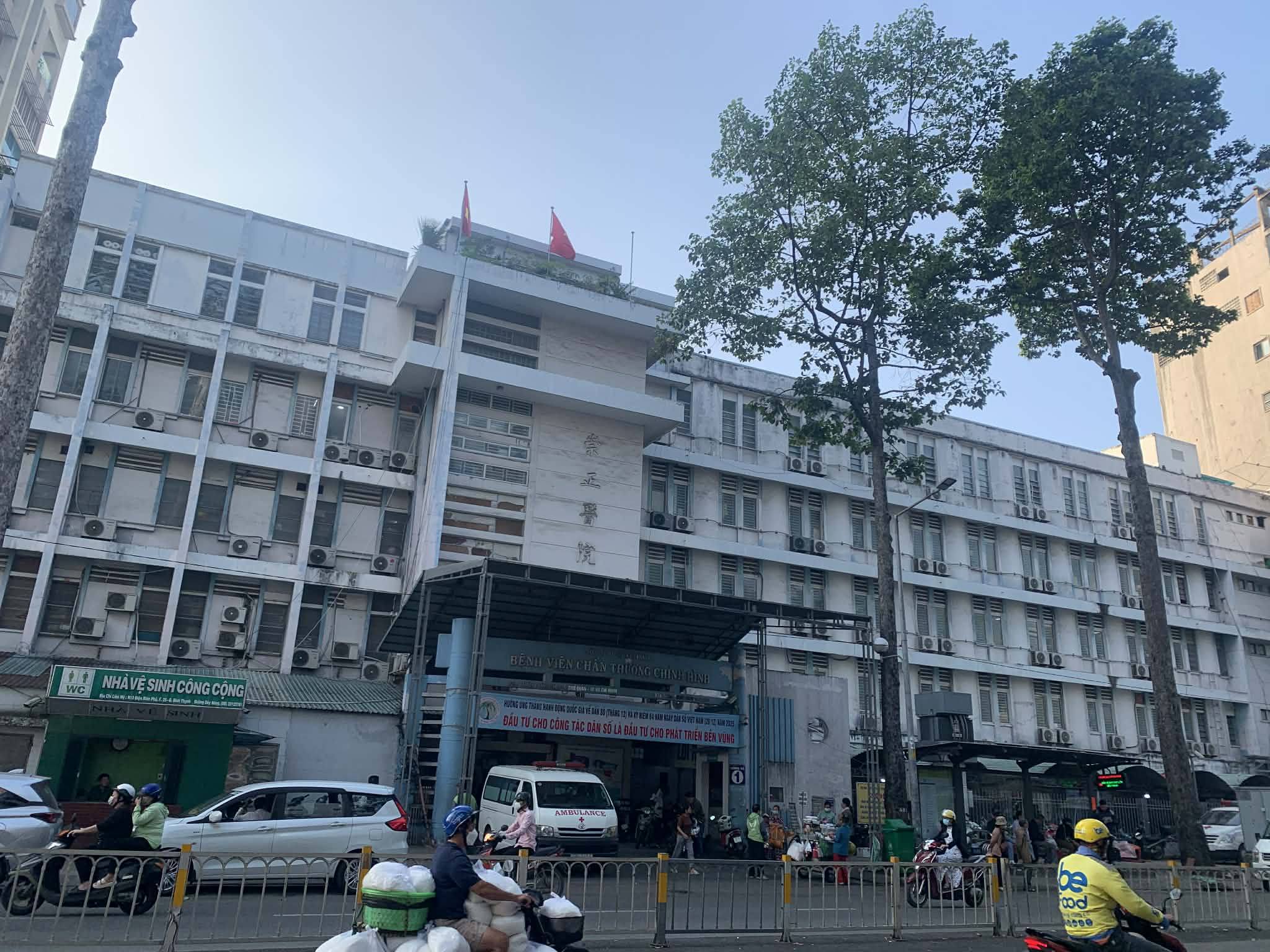
Minister of Health Nguyen Thi Kim Tien told local press on 9 January that more than 300,000 foreigners sought medical care in Vietnam in the previous year, which the report dates to 2018. The patients were described as mostly overseas Vietnamese, with smaller groups from Laos and Cambodia and foreigners residing in Vietnam. The specialties named were dental care, cardiovascular intervention, cosmetic services and some surgical procedures. No revenue figure was given, and no figures were given for Vietnamese travelling abroad for treatment or money spent doing so. Bach Mai Hospital and Viet Duc Hospital No. 2, both then under construction with foreign-inspired designs, were named.[1]
The composition is the whole story. A count of foreigners who sought medical care in a country is not a count of people who travelled there for it, and the minister’s own description makes clear that the 300,000 contains at least three distinct populations: diaspora returning for treatment, patients crossing from two neighbouring countries, and foreign nationals living in Vietnam who used Vietnamese healthcare where they live.
Only the first two are medical travel in any sense, and the third is simply residents using local services. Expatriates in Hanoi or Ho Chi Minh City attending a clinic are no more medical tourists than a foreign national living in London attending a British hospital. Including them inflates a destination figure with ordinary domestic healthcare delivered to people who happen to hold another passport.
No breakdown between the three groups was given, so the medical travel component of the 300,000 cannot be isolated. This is the same conflation this site treats as a standing problem in destination statistics, and Vietnam is the clearest case of it being visible on the face of the official statement.[1]
Diaspora, not price arbitrage
That the patients were mostly overseas Vietnamese places Vietnam in a category with several other countries in this series. In the Dominican Republic, 13 of 18 patients interviewed in a documented infection cluster, or 72 per cent, were born in the country where they had surgery. Diaspora medical travel is driven by family, language, trust and the ability to recuperate in a relative’s home as much as by price, and it behaves differently from the price-driven travel that destination marketing describes.
It also means the market is not readily transferable. A destination whose foreign caseload is mostly its own diaspora cannot assume that patients with no national connection will follow, and growth projections built on the 300,000 figure would be projecting from a base that is largely not what it appears to be.
Regional scale
A 2015 briefing by an economist in the United States International Trade Commission’s Office of Industries, published as the author’s own views and not the Commission’s, names the leading global providers as Thailand with about 1 million visitors a year, India with 500,000 and Singapore with 350,000, and gives the global estimate of roughly 3 million patients travelling for healthcare each year. It records that many health travellers from the Middle East went to Southeast Asia after restrictive visa requirements reduced the numbers able to enter the United States.[3]
Set against those figures Vietnam’s 300,000 would place it in the same order of magnitude as Singapore, which is implausible on its face and is a further reason to treat the figure as measuring something broader than medical travel. The comparison is offered to show that the numbers are not comparable, not to rank them.
The Centers for Disease Control and Prevention lists cosmetic surgery, dental care, cancer treatment, fertility treatment and organ transplantation as the procedures most often sought abroad, which overlaps with three of the four specialties the Vietnamese minister named. It notes that some highly resistant bacteria and fungi including Candida auris appear more common in some countries where patients seek care, recommends screening for carbapenem-resistant Enterobacterales after an overnight stay in a foreign healthcare facility within six months, and states that accreditation does not guarantee a good outcome.[2]
Limits of the evidence
No Vietnamese Ministry of Health publication, statistical series, hospital capacity figure or accreditation register was located. The single figure is eight years old, reported at second hand from remarks to the press, carries no breakdown by patient category, and appears in an article that gives no publication year, so even the date of the reporting is inferred. No outbound figure for Vietnamese patients was found. Nothing has been estimated, and no attempt is made here to isolate a medical travel component from the 300,000.
See also
- Medical travellers and resident foreign patients, the distinction this figure collapses
- Diaspora medical travel, which most of the caseload is
- Medical tourism in Thailand, the regional leader the figure invites comparison with
- Cross-border healthcare for border communities, covering the patients from Laos and Cambodia
- Medical tourism statistics, and a figure that measures three things at once
References
- Hanoi Times. Over 300,000 foreigners seek medical treatment in Vietnam in 2018. Independently reported: the report was opened and the statement that more than 300,000 foreigners sought medical care in Vietnam in the previous year, its attribution to Minister of Health Nguyen Thi Kim Tien who told local press on 9 January, the description of the patients as mostly overseas Vietnamese with smaller groups from Laos and Cambodia and foreigners residing in Vietnam, the specialties of dental care, cardiovascular intervention, cosmetic services and some surgical procedures, the naming of Bach Mai Hospital and Viet Duc Hospital No. 2 as being built with foreign-inspired designs, the absence of any revenue figure, and the absence of any figures on Vietnamese travelling abroad for treatment or money spent were read directly. The article gives no explicit publication year; the 2018 reference indicates 2019. Retrieved 23 October 2026.
- Stoney, R. J. and Leidel, L. Medical Tourism. CDC Yellow Book: Health Information for International Travel, 2026 edition, United States Centers for Disease Control and Prevention. Page dated 23 April 2025. Independently reported: the chapter was opened and the listing of cosmetic surgery, dental care, cancer treatment, fertility treatment and organ transplantation as the procedures most often sought abroad, the note that highly resistant bacteria and fungi including Candida auris appear more common in some countries where patients seek care, the recommendation to screen for carbapenem-resistant Enterobacterales after an overnight stay in a foreign healthcare facility within six months, and the statement that accreditation does not guarantee a good outcome were read directly. Retrieved 23 October 2026.
- Chambers, A. Trends in U.S. Health Travel Services Trade. Office of Industries, United States International Trade Commission, Executive Briefing on Trade, August 2015. Independently reported: the briefing was opened and the identification of the leading global providers as Thailand with about 1 million visitors a year, India with 500,000 and Singapore with 350,000, the global estimate that roughly 3 million patients are thought to travel for healthcare each year, and the statement that many health travellers from the Middle East went to Southeast Asia after restrictive visa requirements reduced the numbers able to enter the United States were read directly. The briefing states that the views expressed are those of the author and not those of the Commission. Retrieved 23 October 2026.
Sourcing note: this entry does not treat the 300,000 figure as a medical tourism statistic, because the minister who gave it described a caseload including foreigners resident in Vietnam. No attempt is made to estimate what share of it represents medical travel, since no breakdown exists. The comparison with regional leaders is offered to demonstrate that the figures are not comparable, not to place Vietnam among them. Nothing has been estimated.