
This article describes the institution. For the accreditation scheme referred to below, see Organizations.
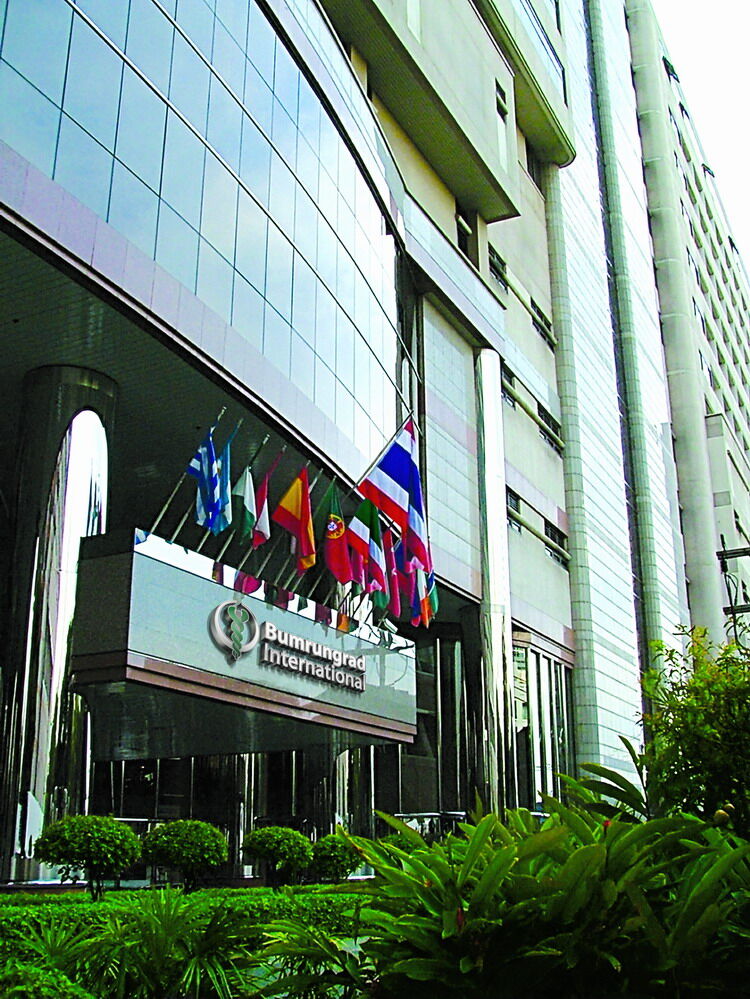
| Independently reported | |
| Type | Private tertiary hospital |
|---|---|
| Location | Watthana, Bangkok, Thailand |
| Founded | 17 September 1980 |
| Operator | Bumrungrad Hospital Public Company Limited |
| Listing | Stock Exchange of Thailand, ticker BH, listed 15 December 1989 |
| JCI accredited | Reported since 2002 |
| Provider-supplied | |
| Inpatient beds | 580 (2019) |
| Intensive care beds | 63 (2019) |
| Physicians and dentists | About 1,200 (year not stated) |
| Total staff | More than 4,800 (year not stated) |
| Referral offices | 23 (2019) |
| Upper block: facts reported by sources other than the hospital, none yet confirmed against a primary register. Lower block: figures the hospital publishes about itself, with the reporting year where it is stated. | |
Bumrungrad International Hospital is a private tertiary hospital in the Watthana district of Bangkok, Thailand, founded on 17 September 1980.[1] It is operated by Bumrungrad Hospital Public Company Limited, which has been listed on the Stock Exchange of Thailand under the ticker BH since 15 December 1989.[2]
Several secondary accounts state that in 2002 the hospital became the first in Asia accredited by Joint Commission International.[3] That claim has not been confirmed against JCI’s own register for this entry, and the register was not reachable at the time of writing.
Because its operator is publicly listed, Bumrungrad reports more about its own activity than most privately held hospitals in the region. That does not make every published figure comparable: counts of beds, specialty centres and international patients differ between reporting years and between the hospital and third parties, and are discussed below.
History
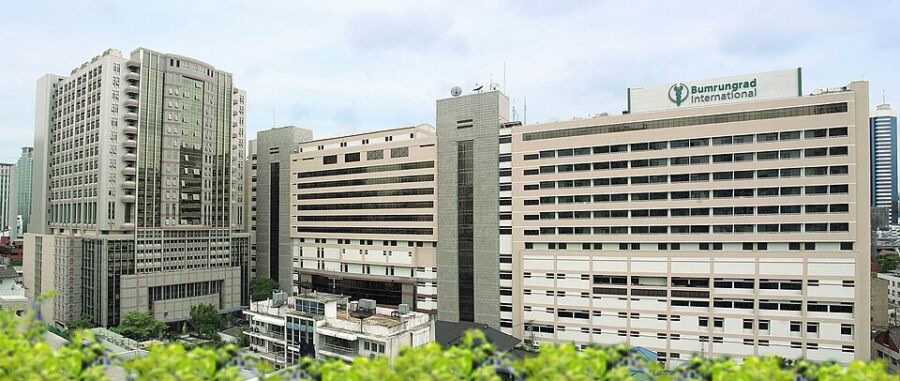
The hospital opened in 1980 on Soi Nana Nua in the Sukhumvit area of Bangkok, in what is now Watthana district.[4] Its operating company listed on the Stock Exchange of Thailand in December 1989.[2]
Secondary accounts describe substantial rebuilding and expansion during the 1990s and 2000s, including a main building completed in 1997 and a separate clinic building in 2008.[4] This entry has not verified those construction dates against planning or corporate records.
Accreditation
Accreditation status can be checked against the awarding body rather than the hospital, as can the operating company’s stock exchange listing. Readers confirming a current status should consult the awarding organisation directly, since accreditations lapse and are renewed on their own cycles. The dates below are as reported by secondary sources and have not been read from the registers named in the third column.
| Body | First awarded, as reported | Verify with |
|---|---|---|
| Joint Commission International | 2002 | JCI accredited organisations register |
| Healthcare Accreditation Institute, Thailand | 1999 | HAI certificate register |
| Global Healthcare Accreditation | 2017 | GHA accredited programmes list |
Reported scale
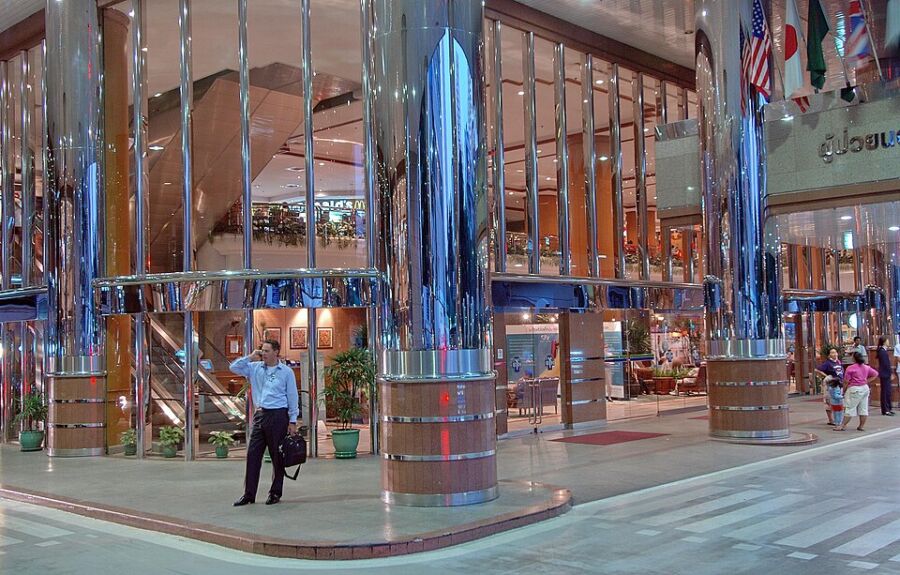
Published figures for Bumrungrad vary widely, and the variation is not random. Three separate problems affect them.
- Specialty centre counts are not defined consistently. Figures between roughly 33 and 70 appear in material published since 2010, reflecting changes in what the hospital counts as a centre rather than growth on that scale.[4]
- International patient totals depend on who counts as international. Figures between about 450,000 and 640,000 appear in material published between 2019 and 2025. No public source states consistently whether expatriates resident in Thailand are included.[4]
- Third-party pages repeat hospital figures without dating them. A number first published in an annual report is widely reproduced years later with no reporting year attached, which makes a stale figure look current.
For that reason the infobox above separates figures reported by third parties from those the hospital publishes about itself, and this article does not state a single patient volume.
Role in medical travel
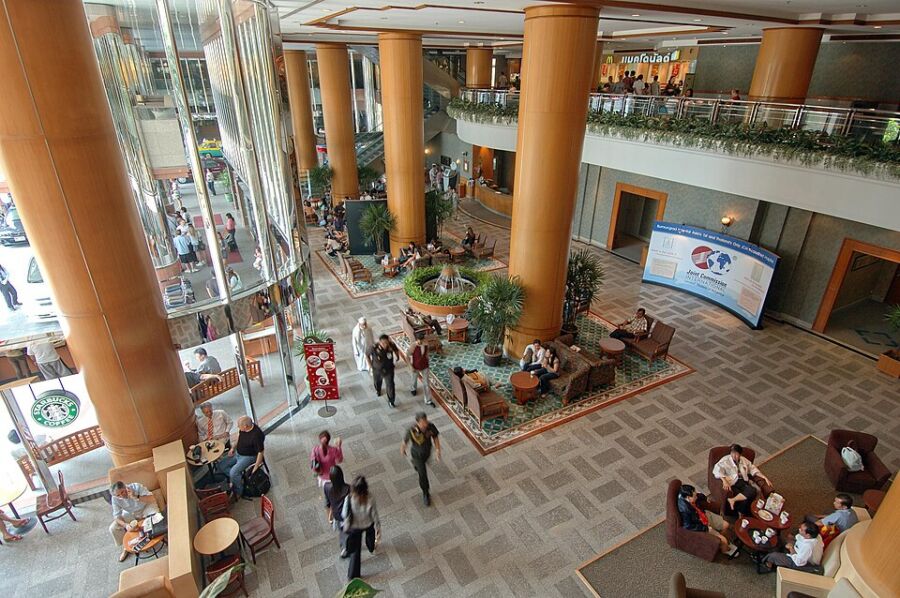
Bumrungrad is cited in academic and trade writing as an early example of a hospital organised around inbound international patients, with a dedicated coordination function, multilingual staff and direct billing arrangements with foreign insurers.[4] This entry has not surveyed that literature systematically, and the characterisation should be read as common rather than established.
This article does not assess the quality of care at the hospital, compare it with other providers, or recommend it. Accreditation indicates that an organisation met a published standard on the date it was assessed. It is not a statement about the outcome of any individual treatment.
See also
- Medical tourism, the term for travel undertaken to receive treatment
- International patients, how hospitals and statisticians count people treated from abroad
- Organizations, covering accreditation bodies and regulators
- Regulation, covering licensing and cross-border patient rights
- Risks and safety, covering complications and aftercare gaps in cross-border care
References
- Founding date as reported by the hospital and repeated in secondary compilations. Provider-supplied in origin.
- Stock Exchange of Thailand, listed company information for BH. set.or.th. Listing date taken from a secondary compilation, not read from the exchange record. Retrieved 24 September 2026.
- Joint Commission International, accredited organisations register. jointcommissioninternational.org. The register returned an access error when checked on 24 September 2026 and the accreditation year could not be confirmed from it.
- Bumrungrad International Hospital, Wikipedia. Secondary compilation used for dates, capacity figures and the range of reported patient volumes. en.wikipedia.org. Retrieved 24 September 2026.
Sourcing note: no claim in this entry has been read from a primary register. The upper infobox block holds facts reported by sources other than the hospital; the lower block holds the hospital’s own figures. The JCI register was unreachable on 24 September 2026. Accreditation years, the listing date and the construction dates should be treated as reported rather than verified until someone opens the underlying records. The photographs were taken in 2006 and 2008, or are of unrecorded date and were published in 2016, so they may not show the buildings as they now stand.