
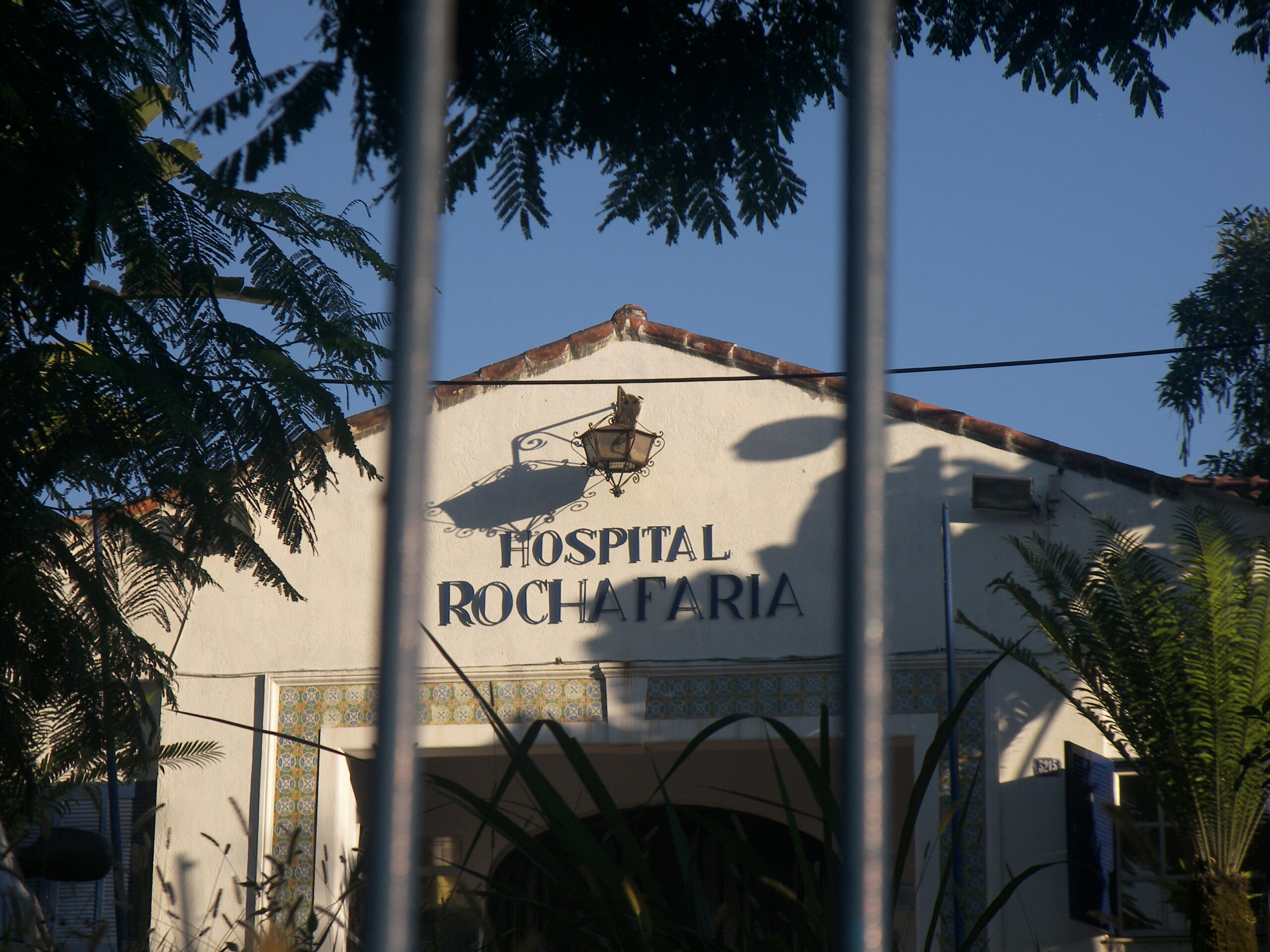
| Independently reported | |
| Foreigners treated | Around 50,000 in the year before a June 2007 report, attributed to figures supplied by the Ministry of Tourism[1] |
|---|---|
| Share for plastic surgery | Half, in clinics in Rio de Janeiro, Sao Paulo and the Northeast[1] |
| Reported growth | 65 per cent over a 2004 total; the report does not make the baseline clear[1] |
| Revenue | No figure given[1] |
| Source countries | Not given[1] |
| South America in United States outbound health travel | 26 per cent of destinations, the largest regional share[3] |
| Cosmetic procedures most sought by United States travellers | Abdominoplasty, breast augmentation, buttock augmentation, liposuction and rhinoplasty[2] |
| This entry has no primary-record band. No Brazilian government publication was read directly. The single Brazilian figure located is nearly two decades old, reaches this entry through a news agency report, does not state the year it covers, and comes with a growth rate whose baseline the report leaves ambiguous. It should not be treated as a measure of Brazil’s current sector. No typical cost range is given. | |
Medical tourism in Brazil is strongly associated with plastic surgery, and the association is the only thing the accessible official record supports. A single Ministry of Tourism figure, reported in June 2007, put foreign health treatment visitors at around 50,000 in the preceding year, half of them for plastic surgery. No more recent Brazilian government figure was located, which leaves the largest country in South America documented by a number from roughly 2006.
The one official figure
A report published by a Brazilian news agency on 11 June 2007 states that Brazil received around 50,000 foreigners for health treatments in the previous year, according to figures supplied by the Ministry of Tourism, and that half of them came for plastic surgery in clinics in Rio de Janeiro, Sao Paulo and the Northeast. It reports 65 per cent growth over the total visiting the country in 2004, though its wording does not make clear whether that baseline is the total number of visitors or the total of health treatment visitors.[1]
The report gives no revenue figure, names no source countries and names no hospitals, identifying only cities and regions. It does not state which year the 50,000 covers; published in 2007, it most likely refers to 2006, but that is an inference rather than a statement in the source.[1]
The ambiguous baseline is not a trivial editorial flaw. If the 65 per cent growth is measured against total visitors to Brazil in 2004 rather than against health treatment visitors, the two quantities are not comparable and the growth figure means nothing at all. A reader cannot tell which was intended, so neither reading is adopted here.
The plastic surgery association
Brazil’s reputation in medical travel rests on cosmetic surgery, and the public health record from the destination countries most relevant to it is consistent with that emphasis. The Centers for Disease Control and Prevention identifies the cosmetic procedures most often sought by United States residents travelling abroad as abdominoplasty, breast augmentation, buttock augmentation, liposuction and rhinoplasty, and names several South American countries among the most common destinations.[2]
The same source sets out the risk profile that attaches to this specialty in medical travel: documented outbreaks include surgical site infections from nontuberculous mycobacteria after cosmetic surgery in the Dominican Republic and carbapenem-resistant and fungal infections after procedures in Mexico. It advises not flying for 10 days after chest or abdominal surgery, records the American Society of Plastic Surgeons recommendation to wait seven to 10 days after procedures on the face, eyelids or nose, and notes that travel after surgery raises blood clot risk.[2]
No Brazilian outbreak appears in that record. As elsewhere in this series, the absence should not be read as a safety finding, because detection of such clusters depends on clinicians in the patient’s home country recognising and reporting an unusual infection rather than on routine surveillance of destination countries.
Regional position
A 2015 briefing by an economist in the United States International Trade Commission’s Office of Industries, published as the author’s own views and not the Commission’s, records South America as 26 per cent of destinations for outbound United States health travellers in 2011, the largest regional share, ahead of the Caribbean at 19 per cent and Central America at 18 per cent. It gives no country-level breakdown within South America, so Brazil’s share of that 26 per cent cannot be established from it.[3]
Brazil is also a destination for patients from elsewhere in South America and from Portuguese-speaking Africa, and is widely promoted for cosmetic surgery, dentistry, bariatric surgery and fertility treatment. No official Brazilian figure quantifying any of that was located, and none has been estimated.
Limits of the evidence
This entry is thin in proportion to Brazil’s size, and the thinness is a property of what could be opened. No Brazilian Ministry of Health or Ministry of Tourism publication, no national statistics institute series, no health regulator document and no plastic surgery society figure was retrieved. The one figure given is nearly two decades old, second-hand, undated as to the year it covers, and paired with an uninterpretable growth rate. Commercial medical tourism directories and market research summaries carrying Brazilian patient volumes were excluded because their figures carry no verifiable source.
See also
- Cosmetic surgery tourism, the specialty Brazil is identified with
- Medical tourism in Argentina, the neighbouring destination with more recent figures
- Medical tourism in the Dominican Republic, where the cosmetic surgery risk record was documented
- Destination markets in medical tourism, and what counts as a measured one
- Medical tourism statistics, and an uninterpretable growth rate
References
- Brazil-Arab News Agency. Foreigners visit Brazil for health treatment. Published 11 June 2007, page last updated 30 June 2019. Independently reported: the report was opened and the statement that Brazil received around 50,000 foreigners for health treatments in the previous year according to figures supplied by the Ministry of Tourism, the statement that half of these people came for plastic surgery in clinics in Rio de Janeiro, Sao Paulo and the Northeast, the reported 65 per cent growth over the total visiting the country in 2004 with wording that does not make the baseline clear, the absence of any revenue figure, the absence of any source country breakdown, the absence of any named hospitals, and the absence of any statement of which year the 50,000 covers were read directly. Retrieved 23 October 2026.
- Stoney, R. J. and Leidel, L. Medical Tourism. CDC Yellow Book: Health Information for International Travel, 2026 edition, United States Centers for Disease Control and Prevention. Page dated 23 April 2025. Independently reported: the chapter was opened and the identification of abdominoplasty, breast augmentation, buttock augmentation, liposuction and rhinoplasty as the cosmetic procedures most often sought, the naming of several South American countries among the most common destinations for United States medical tourists, the documented outbreaks of nontuberculous mycobacteria surgical site infections after cosmetic surgery in the Dominican Republic and of carbapenem-resistant and fungal infections after procedures in Mexico, the guidance not to fly for 10 days after chest or abdominal surgery, the American Society of Plastic Surgeons recommendation to wait seven to 10 days after laser or cosmetic procedures on the face, eyelids or nose, and the note that travel after surgery raises blood clot risk were read directly. Retrieved 23 October 2026.
- Chambers, A. Trends in U.S. Health Travel Services Trade. Office of Industries, United States International Trade Commission, Executive Briefing on Trade, August 2015. Independently reported: the briefing was opened and the 2011 outbound destination shares of South America 26 per cent, Caribbean 19 per cent and Central America 18 per cent, together with the absence of any country-level breakdown within those regional aggregates, were read directly. The briefing states that the views expressed are those of the author and not those of the Commission. Retrieved 23 October 2026.
Sourcing note: Brazil’s entry is thin because the accessible official record is thin, not because the sector is small. The one figure available is given with its age, its second-hand provenance and its undated coverage year all stated, and the growth rate attached to it is declared uninterpretable rather than reproduced as though it meant something. Market research summaries carrying Brazilian patient volumes were excluded for want of a verifiable source. Nothing has been estimated.