
| Verified against primary record | |
| Medical tourism in the WHO country strategy | Not mentioned anywhere in the 2021 to 2025 strategy[1] |
|---|---|
| WHO strategic priorities for Jordan | Universal health coverage, health and well-being, emergency resilience, data and innovation[1] |
| Independently reported | |
| Medical tourists (2024) | 224,000, stated by the president of the Private Hospitals Association[2] |
| Change in 2025 | A rise of 4 per cent on 2024; no absolute count was published[2] |
| Private hospital sector investment | Over JD 4 billion[2] |
| Employment claimed | About 40,000 direct jobs and nearly 60,000 in supporting industries, providing income for about 100,000 families[2] |
| Regional pattern | Visa restrictions were said to have pushed many Middle Eastern patients toward Southeast Asia[3] |
| Bands apply only to the rows beneath them. No figure in the lower band comes from a government statistical series. All of them are statements by the president of the Private Hospitals Association, an industry body whose members benefit from high numbers, reported through the national news agency. No revenue figure, no breakdown by source country and no count of private hospitals was given. No typical cost range is given because no official Jordanian source publishes prices paid by foreign patients. | |
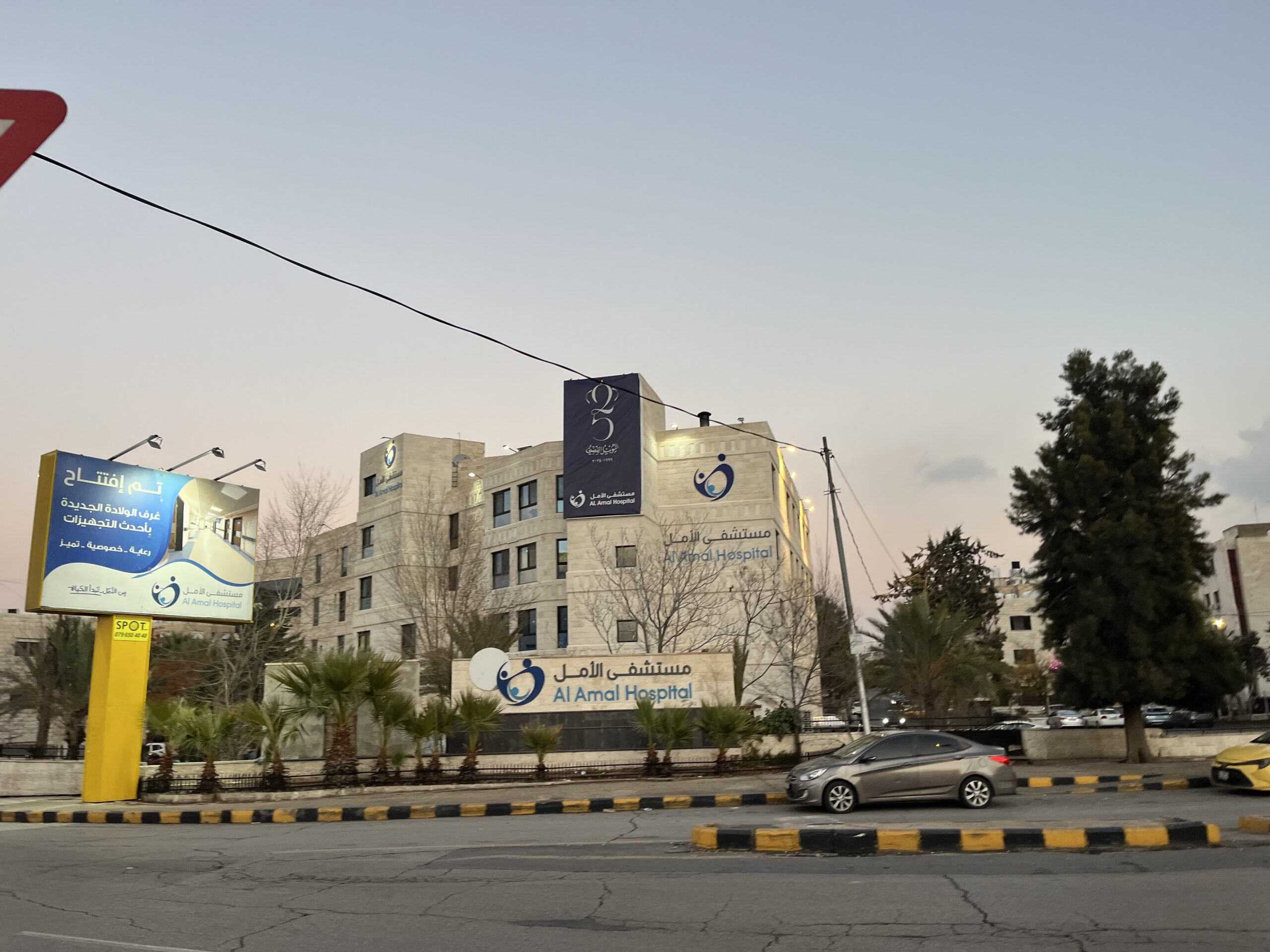
Medical tourism in Jordan is widely described as one of the longest-established industries of its kind in the Middle East, but the documentary position is unusual: the only figures available come from the sector’s own trade association, while the World Health Organization country cooperation strategy for Jordan, which is the natural place for an official account of the activity, does not mention it at all.
What the industry reports
Fawzi Hammouri, president of the Private Hospitals Association, is reported through the Jordan News Agency as stating that Jordan received 224,000 medical tourists in 2024, and that the number of foreign patients at private hospitals rose by 4 per cent in 2025 against 2024. He put investment in the private hospital sector at over 4 billion Jordanian dinars, and said the sector directly employs around 40,000 people with nearly 60,000 in supporting industries, providing income for approximately 100,000 families.[2]
Two features of that reporting deserve attention. The 2025 figure is a growth rate rather than a count, so the absolute number of patients in 2025 is not stated and cannot be derived without knowing whether the 224,000 figure for 2024 covers the same population as the private hospital series it is being compared against. The report does not say whether the 224,000 covers only private hospital patients or all facilities.[2]
The employment and investment claims are of a different character again. They describe the private hospital sector as a whole rather than the share of it that treats foreign patients, so they cannot be read as a measure of medical tourism even if accurate.
What the official record contains
The country cooperation strategy for WHO and Jordan covering 2021 to 2025, published on 21 June 2022, sets a five-year framework built on Jordan Vision 2025, national health policies, the United Nations Sustainable Development Framework for Jordan and WHO’s programme of work. Its four strategic priorities are strengthening the health system towards universal health coverage, promoting health and well-being, building resilience and capacity for health emergencies, and strengthening data and innovation capacity. It describes socioeconomic strain from the global financial crisis, regional instability and refugees from the Syrian crisis, compounded by the coronavirus pandemic.[1]
Medical tourism, health tourism and foreign patients do not appear. The only cross-border movement of people the strategy discusses is the arrival of refugees.[1]
That omission is the most informative thing in the Jordanian record. A country routinely described as a regional medical travel hub has no official account of the activity in the document that sets its health priorities with the World Health Organization, which means the numbers in public circulation have no governmental counterpart against which to check them.
Regional context
A 2015 briefing by an economist at the United States International Trade Commission, published as the author’s own views rather than those of the Commission, recorded that visa restrictions had pushed many Middle Eastern patients toward Southeast Asia. Jordan’s traditional patient base is the surrounding region, so shifts of that kind bear on it directly, though the briefing names no countries of treatment or origin and is now a decade old.[3]
Limits of the evidence
No Jordanian Ministry of Health statistical series on foreign patients was located, and no government revenue figure, accreditation register or hospital count was found. The patient numbers reported here are industry statements relayed by a news agency, not official statistics, and they are placed in the independently reported band for that reason rather than being treated as data. Nothing has been estimated.
See also
- Medical tourism in Israel, the neighbour that regulates the activity by statute
- Medical tourism in Lebanon, whose private hospital sector collapsed in the financial crisis
- Source markets in medical tourism, the regional base Jordan draws on
- Medical tourism statistics, and why trade-body figures are not official ones
- Conflicts of interest in medical tourism research, relevant where the only counter is an industry body
References
- WHO Regional Office for the Eastern Mediterranean. Country cooperation strategy for WHO and Jordan 2021-2025. Published 21 June 2022, 41 pages, ISBN 9789290227014. Verified against primary record: the publication entry was opened and the period covered, the publisher, the publication date, the page count, the five-year framework and the documents it builds on including Jordan Vision 2025 and the United Nations Sustainable Development Framework for Jordan, the four strategic priorities of universal health coverage, health and well-being, emergency resilience and data and innovation capacity, the described context of financial crisis, regional instability and Syrian refugees compounded by the coronavirus pandemic, the absence of any health system statistics, and the absence of any reference to medical tourism, health tourism or foreign patients were read directly. Retrieved 23 October 2026.
- The Jordan Times, reporting the Jordan News Agency (Petra). Foreign patients at Jordan’s private hospitals rise 4% in 2025: PHA. Republished by Zawya. Independently reported: the report was opened and the attribution of every figure to Fawzi Hammouri, president of the Private Hospitals Association, the statement that Jordan received 224,000 medical tourists in 2024, the 4 per cent rise in foreign patients at private hospitals in 2025 with no absolute count given, the figure of investments exceeding JD 4 billion, the claims of around 40,000 direct jobs and nearly 60,000 in supporting industries providing income for approximately 100,000 families, the absence of any revenue figure, the absence of any source country breakdown and the absence of any count of private hospitals were read directly. The article carries no publication date. Retrieved 23 October 2026.
- Chambers, A. Trends in U.S. Health Travel Services Trade. Office of Industries, United States International Trade Commission, Executive Briefing on Trade, August 2015. Independently reported: the briefing was opened and the statement that visa restrictions had pushed many Middle Eastern patients towards Southeast Asia was read. The briefing states that the views expressed are the author’s and not those of the Commission, and it is placed in this band for that reason. Retrieved 23 October 2026.
Sourcing note: this entry deliberately separates what the industry says from what the official record contains, because in Jordan’s case they do not overlap at all. The Private Hospitals Association figures are reported with their attribution foregrounded rather than presented as statistics, and the ambiguity about whether the 224,000 figure covers private hospitals alone is stated rather than resolved. No commercial destination marketing has been used and nothing has been estimated.