

| Independently reported | |
| Accredited facility | Hospital Punta Pacifica, Panama City, reported in 2011 as the first in Panama with Joint Commission International accreditation[1] |
|---|---|
| Management | Managed by Johns Hopkins Medicine International since 2008[1] |
| Foreign patient figures | None given in any source located[1] |
| Panamanian government policy | No government body or policy named in any source located[1] |
| What accreditation establishes | Accreditation does not guarantee a good outcome[2] |
| Central America in United States health travel | 18 per cent of outbound destinations and 10 per cent of inbound source markets in 2011[3] |
| This entry has no primary-record band and is one of the thinnest in the series. No Panamanian government source on health, hospital capacity or foreign patients was located, and the only facility-level information found is a trade publication report from October 2011. Commercial medical tourism directories carrying Panamanian patient figures were excluded, because they are marketing material and their figures carry no verifiable source. No typical cost range is given. | |
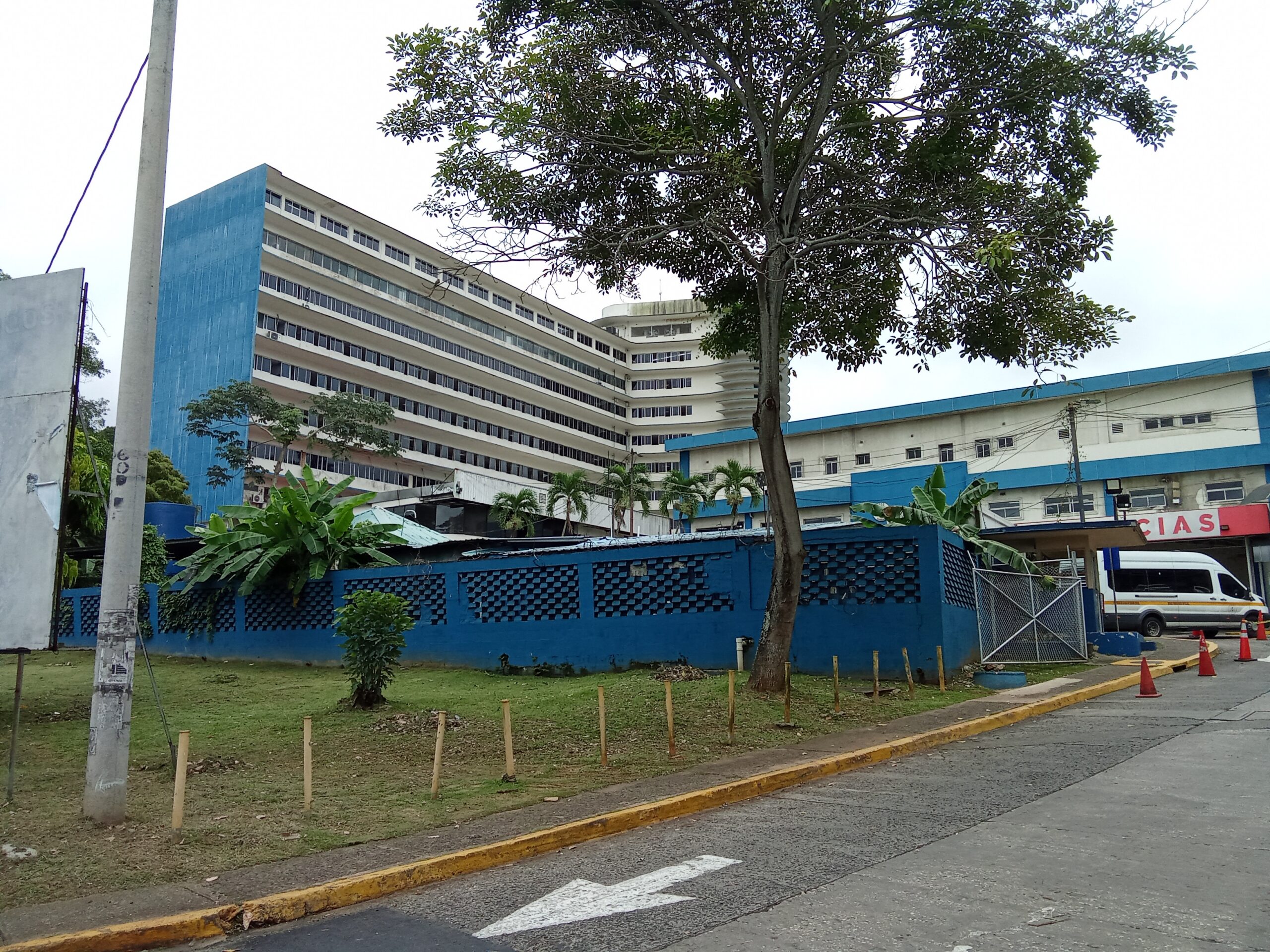
Medical tourism in Panama rests publicly on a single credential: the Joint Commission International accreditation of Hospital Punta Pacifica in Panama City, a facility managed by Johns Hopkins Medicine International. Beyond that, no Panamanian government source describing the sector, and no count of foreign patients, was located for this article.
The accreditation
A trade publication report dated 13 October 2011 records that Hospital Punta Pacifica in Panama City achieved international accreditation from the Joint Commission International, described as the first of its kind in Panama, and that Johns Hopkins Medicine International, the Baltimore-based international arm of Johns Hopkins Medicine, had managed the hospital since 2008. Steve Thompson of Johns Hopkins Medicine International is quoted saying the accreditation validates the efforts of the medical and management teams.[1]
The report gives no accreditation date, no figures on foreign or international patients in Panama, names no Panamanian government body or policy, and mentions no other Panamanian hospitals or their accreditation status.[1]
What an accreditation does and does not show
Panama’s position in medical travel marketing depends heavily on the accreditation-plus-American-affiliation combination, so it is worth setting out what public health authorities say such credentials establish. The United States Centers for Disease Control and Prevention records that the American College of Surgeons recommends internationally accredited facilities and surgeons certified through a process equivalent to American Board of Medical Specialties member boards, and names the Joint Commission International and the Accreditation Association for Ambulatory Health Care among accrediting bodies that list facilities abroad.[2]
The same source states plainly that accreditation does not guarantee a good outcome.[2]
That is the correct frame for reading a 2011 accreditation announcement in 2026. Accreditation is a facility-level process assessment, not a published outcome record, and it is granted for a term rather than permanently, so a fifteen-year-old announcement establishes neither current accredited status nor clinical results. No current accreditation register entry for any Panamanian hospital was located for this article.
The accreditation of one hospital also says nothing about the rest of a country’s provision, and in cosmetic surgery, which is the specialty most associated with medical travel to Central America and the Caribbean, treatment frequently occurs in small private clinics rather than in internationally accredited general hospitals.
Regional position and risk record
A 2015 briefing by an economist in the United States International Trade Commission’s Office of Industries, published as the author’s own views and not the Commission’s, records Central America as 18 per cent of destinations for outbound United States health travellers and 10 per cent of source markets for inbound travellers in 2011. It gives the global estimate of roughly 3 million patients travelling for healthcare each year.[3]
The documented infection outbreaks associated with medical tourism in the region concern Mexico and the Dominican Republic rather than Panama. The Centers for Disease Control and Prevention records fungal meningitis in patients who received epidural anaesthesia in Mexico, carbapenem-resistant Enterobacterales infections after invasive procedures in Mexico, and surgical site infections from nontuberculous mycobacteria after cosmetic surgery in the Dominican Republic. It also advises that some highly resistant bacteria and fungi, including Candida auris, appear more common in some countries where United States residents seek care, and that patients with an overnight stay in a foreign healthcare facility within six months of presenting should be screened for carbapenem-resistant Enterobacterales.[2]
No Panamanian outbreak is recorded in that list, and the absence should be read carefully. It is not evidence that Panamanian facilities are safer, because detection of these clusters depends entirely on clinicians in the patient’s home country recognising an unusual infection and reporting it, and the reporting that produced the Mexican and Dominican findings followed from specific investigations rather than routine surveillance.
Limits of the evidence
This entry rests on one trade publication report about one hospital, from 2011, plus general regional guidance. No Panamanian ministry of health publication, no national statistics, no hospital or bed count, no accreditation register and no patient figure of any kind was located. Panama is extensively promoted as a destination by commercial medical tourism directories carrying specific patient numbers and cost comparisons; none of those has been used, because they are marketing material whose figures carry no verifiable source. Panama deserves a fuller entry than the accessible record supports.
See also
- Medical tourism in the Dominican Republic, where the regional outbreak record was documented
- Medical tourism in Costa Rica, the neighbouring destination with contested figures
- Clinical outcomes in medical tourism, which accreditation does not establish
- Cosmetic surgery tourism, the specialty most associated with the region
- Medical tourism and foreign investment, the model behind the hospital’s management arrangement
References
- International Medical Travel Journal. American-run hospital in Panama achieves JCI certification. Published 13 October 2011. Independently reported: the report was opened and the identification of Hospital Punta Pacifica in Panama City, its management by Johns Hopkins Medicine International since 2008, the achievement of Joint Commission International accreditation described as the first of its kind in Panama, the quotation attributed to Steve Thompson of Johns Hopkins Medicine International that the accreditation validates the efforts of the medical and management teams, the absence of any accreditation date, the absence of any figures on foreign or international patients in Panama, the absence of any named Panamanian government body or policy, and the absence of any mention of other Panamanian hospitals were read directly. Retrieved 23 October 2026.
- Stoney, R. J. and Leidel, L. Medical Tourism. CDC Yellow Book: Health Information for International Travel, 2026 edition, United States Centers for Disease Control and Prevention. Page dated 23 April 2025. Independently reported: the chapter was opened and the American College of Surgeons recommendation of internationally accredited facilities and surgeons certified through a process equivalent to American Board of Medical Specialties member boards, the naming of the Joint Commission International and the Accreditation Association for Ambulatory Health Care among accrediting bodies listing facilities abroad, the explicit statement that accreditation does not guarantee a good outcome, the documented outbreaks of fungal meningitis after epidural anaesthesia in Mexico, carbapenem-resistant Enterobacterales infections after invasive procedures in Mexico and nontuberculous mycobacteria surgical site infections after cosmetic surgery in the Dominican Republic, the note that highly resistant bacteria and fungi including Candida auris appear more common in some countries where United States residents seek care, and the recommendation that patients with an overnight stay in a foreign healthcare facility within six months of presenting be screened for carbapenem-resistant Enterobacterales were read directly. Retrieved 23 October 2026.
- Chambers, A. Trends in U.S. Health Travel Services Trade. Office of Industries, United States International Trade Commission, Executive Briefing on Trade, August 2015. Independently reported: the briefing was opened and the 2011 figures placing Central America at 18 per cent of outbound United States health travel destinations and 10 per cent of inbound source markets, and the global estimate that roughly 3 million patients are thought to travel for healthcare each year, were read directly. The briefing states that the views expressed are those of the author and not those of the Commission. Retrieved 23 October 2026.
Sourcing note: commercial medical tourism directories publish Panamanian patient volumes and price comparisons, and none has been used here, because their figures carry no verifiable source and this site does not launder marketing material into reference content. The entry says instead what could and could not be found. The absence of a Panamanian outbreak from the public health record is explained rather than presented as a safety finding, because these clusters are detected by home-country clinicians and not by routine surveillance.