
| Verified against primary record | |
| Registry scale | 116,845 primary knee replacements in the reference year; over 1.5 million primary hip procedures cumulatively[1] |
|---|---|
| Registry scope | Five named jurisdictions, entry dependent on patient consent[2] |
| Waiting | 847,504 incomplete trauma and orthopaedics pathways in England, January 2025[3] |
| Records read | Registry annual report and waiting times release, 30 September 2026 |
| Independently reported | |
| Implants fitted abroad | Not addressed in the registry’s stated scope, in either direction |
| Bands apply only to the rows beneath them. The waiting figure is a whole-specialty count, not a joint replacement waiting list. | |
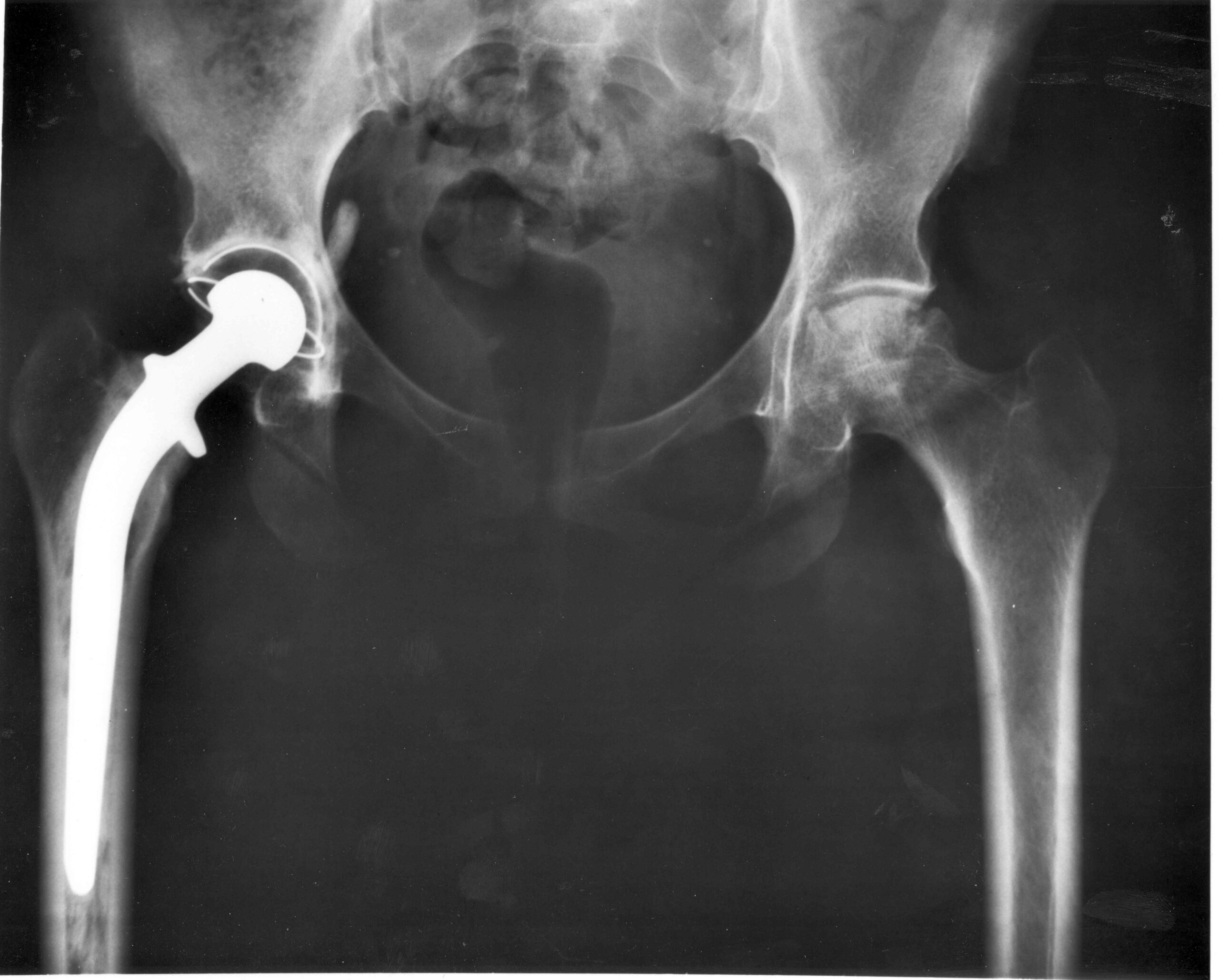
Orthopedic medical travel is travel abroad for musculoskeletal surgery, of which hip and knee replacement is the best known. It has a feature almost unique in medical travel: the procedure is tracked, at home, by some of the most rigorous clinical registries in medicine. That makes what happens when the procedure is performed elsewhere unusually visible as a gap.
What a joint registry does
The British national joint registry collects hip, knee, ankle, elbow and shoulder replacement operations across approximately 500 hospitals and nearly 4,000 surgeons, recording implant performance, hospital outcomes and individual surgeon metrics. Its twenty-first annual report records 116,845 primary knee replacement procedures in the reference year, the highest number of primary total hip replacements since the registry began, more than 1.5 million primary hip procedures and more than 1.66 million primary knee procedures available for analysis in total, and 47,090 first revisions of hip replacements linked to their primary procedures between 2003 and 2023. The four millionth case was submitted shortly after the registry’s twenty-first anniversary.[1]
The purpose of that machinery is to detect implants that fail early. It works by linking a revision operation back to the primary one, which is how a device that performs badly in the population is identified before many more are fitted.
Where the record stops
The registry’s stated geographic scope is England, Wales, Northern Ireland, the Isle of Man and Guernsey, and data entry depends on patient consent.[2] The introduction to its annual report does not address procedures performed outside those jurisdictions, and contains no statement about patients treated overseas.
That is a silence rather than an exclusion, and should be described as one. But the practical consequence of a territorially scoped registry is clear enough: an implant fitted in another country is not linked to a revision performed at home, and neither the device’s performance nor the patient’s long-term outcome enters the dataset that exists to track exactly those things. A surgeon asked to revise such an implant may also not know which system was used. No official guidance on revising an implant fitted in another country was located for this entry.
The waiting that prompts the travel
Joint replacement is elective, high volume and frequently subject to long waits, which is the usual explanation for travel. In England in January 2025 the total referral to treatment waiting list stood at 7.4 million pathways, approximately 6.3 million unique patients, with a median wait of 14.4 weeks, a 92nd percentile wait of 42.4 weeks, 58.9 per cent within 18 weeks and 198,868 pathways waiting over 52 weeks. Within the trauma and orthopaedics specialty there were 847,504 incomplete pathways, of which 56.6 per cent were within 18 weeks.[3]
Two cautions belong with that figure. Trauma and orthopaedics covers the whole specialty, including fractures and much else, so it is not a joint replacement waiting list and should not be presented as one. And a pathway is not a patient; the release distinguishes the two.
See also
- Medical travel and waiting lists, the legal test and the scale of waiting
- Elective medical travel, the planning category this belongs to
- Rehabilitation abroad, the recovery phase these procedures depend on
- Medical travel coordination, where records and follow-up are supposed to be handled
References
- National Joint Registry. 21st Annual Report 2024: Executive summary. Verified against primary record: registry annual report opened and read. The report’s procedure reference year should be confirmed by an editor, as the page carries an inconsistent date line. Retrieved 30 September 2026.
- National Joint Registry. 21st Annual Report 2024: Introduction. Verified against primary record: registry annual report opened and read. Retrieved 30 September 2026.
- NHS England. Statistical Press Notice: Referral to Treatment waiting times, January 2025. Verified against primary record: official statistics release opened and read. Retrieved 30 September 2026.
Sourcing note: the registry report and the waiting times release were opened and read on 30 September 2026. The statement about implants fitted abroad is framed as what the registry’s stated scope covers and what its report does not address, rather than as a documented exclusion, because the report contains no statement either way. The waiting figure is labelled as a whole-specialty count. No figure is given for orthopaedic patients travelling abroad, because none was located.