
| Verified against primary record | |
| Health spending per person (2021) | USD 673 at purchasing power parity, of which USD 264 public[1] |
|---|---|
| Out-of-pocket share (2021) | 60.3 per cent of health spending, about USD 406 per person, against a WHO European Region average of 26.6 per cent[1] |
| Impoverishment from health spending | 2.5 per cent of households, about 800,000 people, each year[1] |
| Public health spending (2021) | 3 per cent of GDP, up from 2.4 per cent in 2019; public share of health spending 39.2 per cent[1] |
| Private hospitals | Small, averaging about 30 beds in 2023[1] |
| Hospital beds (2023) | About 166,900 in total, of which 124,176 public[1] |
| Medical tourism in the comparative profile | Not mentioned; the only reference to going abroad concerns health workers[1] |
| Bands apply only to the rows beneath them. No official Uzbek count of foreign patients, no medical tourism revenue figure and no outbound patient figure was located, and none has been estimated. No typical cost range is given because no official Uzbek source publishes prices paid by foreign patients. | |
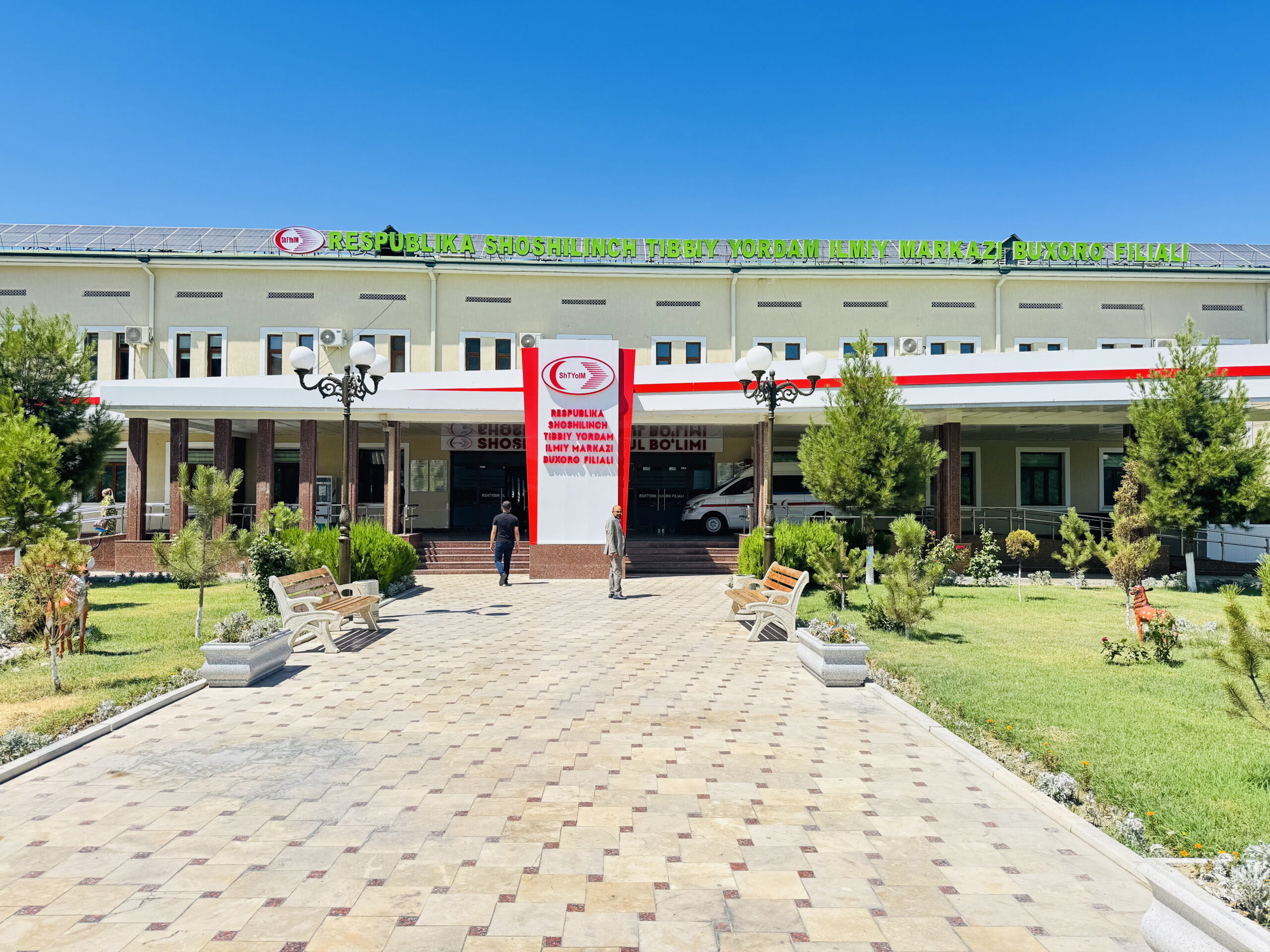
Medical tourism in Uzbekistan does not appear in the country’s comparative health system assessment, which instead documents one of the heaviest out-of-pocket burdens in the WHO European Region: 60.3 per cent of health spending comes directly from patients, and about 800,000 people are pushed into poverty by health costs each year. The private hospital sector exists but is small, averaging about 30 beds per facility.
Who pays, and what it costs them
The WHO European Observatory profile records total health spending of 673 United States dollars per person at purchasing power parity in 2021, of which 264 dollars was public. Public health spending rose to 3 per cent of gross domestic product in 2021 from 2.4 per cent in 2019, but the public share of total health spending was 39.2 per cent. Out-of-pocket payments accounted for 60.3 per cent of health spending, about 406 dollars per person, against a WHO European Region average of 26.6 per cent. The profile records that 2.5 per cent of households, roughly 800,000 people, are impoverished each year by out-of-pocket health spending, and that informal payments are reported.[1]
That is the central fact about healthcare in Uzbekistan and it bears directly on medical travel, though not in the direction destination marketing usually implies. A population paying three fifths of health costs directly, at a level that impoverishes hundreds of thousands of people a year, is a population for which any treatment abroad is a cost borne personally and without insurance cover.
Provider structure
The health ministry leads a largely public service, with tripartite governance and gradual decentralisation. State services are funded from general taxation and public health workers are salaried. The private sector has grown, but private hospitals are small, averaging about 30 beds in 2023, and many doctors work in both the public and private sectors. Care for HIV and AIDS and for tuberculosis must by law be provided publicly.[1]
An average private hospital of about 30 beds is a different kind of institution from the large private groups that serve international patients elsewhere. It is worth stating plainly, because the scale of the private sector is the usual proxy for a country’s capacity to treat foreign patients, and in Uzbekistan that scale is small.
Capacity and workforce
Hospital beds per 100,000 people moved from 420 in 2016 to 486 in 2021 and 454 in 2023, giving about 166,900 beds in 2023, of which 124,176 were public. Provision is uneven: Tashkent City had about 700 public beds per 100,000 against 268 to 439 elsewhere. Physicians numbered 281 per 100,000 in 2021 against a WHO European Region average of 389, with national data giving 273 in 2023. Nurses numbered 535 per 100,000 in 2020 against a regional average of 803, with national data giving 1,040 in 2023. Over half the population is rural while staff are concentrated in urban areas, and there is a shortage of family doctors.[1]
The nurse figures illustrate why national and international series should not be mixed. WHO reports 535 nurses per 100,000 for 2020 while national data gives 1,040 for 2023, a difference too large to be growth alone and more likely a difference in who counts as a nurse. Both are reported here as the source reports them, without reconciliation.[1]
Movement across borders
The profile makes no reference to medical tourism, health tourism, or foreign patients treated in Uzbekistan. The only cross-border movement it discusses is health worker emigration, mainly to Russia and Kazakhstan and more recently to Germany.[1]
Kazakhstan, the neighbour receiving some of those health workers, spends 1,114 dollars per person on health against Uzbekistan’s 673 and has an out-of-pocket share of 25.0 per cent against Uzbekistan’s 60.3 per cent. The gradient between the two systems is steep, and it runs in the direction of Kazakhstan.[3]
Uzbekistan’s profile belongs to the Health Systems in Action insight series, produced by WHO Europe with the European Observatory for 15 countries in the WHO European Region outside the European Union, built on a common template to ensure consistency and support cross-country comparison and updated every two years. Because the template is shared, the absence of inbound patient care from the Uzbek profile is not a local omission; the same silence appears in the profiles for Armenia, Georgia and Kazakhstan.[2]
Limits of the evidence
Everything quantified here describes the Uzbek health system rather than medical travel to or from it. No ministry statistic on foreign patients, no accreditation register and no revenue figure was located. Bed, physician and nurse figures mix WHO and national series with different definitions and different years, and are reported as the source reports them rather than harmonised.
See also
- Medical tourism in Kazakhstan, the better-funded neighbour receiving Uzbek health workers
- Medical tourism and health workforce migration, the cross-border flow the record does document
- Medical travel and treatment affordability, in a system where patients pay 60 per cent directly
- Medical tourism and health equity, given annual impoverishment from health costs
- Medical tourism and universal health coverage, the framework these figures are assessed against
References
- Robinson, S. and Yin, J. Health Systems in Action Insights: Uzbekistan, 2024 Edition. WHO Regional Office for Europe and European Observatory on Health Systems and Policies, Copenhagen, 2025. Verified against primary record: the report was opened and the leadership of the health ministry over largely public services, the tripartite governance and gradual decentralisation, funding of state services from general taxation with salaried public health workers, the growth of the private sector alongside private hospitals averaging about 30 beds in 2023, dual public and private practice by many doctors, the legal requirement for public provision of HIV, AIDS and tuberculosis care, total health spending of USD 673 PPP per person in 2021 with USD 264 public, public health spending at 3 per cent of GDP in 2021 against 2.4 per cent in 2019, the public share of 39.2 per cent, out-of-pocket spending at 60.3 per cent of health spending and about USD 406 per person against the regional average of 26.6 per cent, the impoverishment of 2.5 per cent of households or about 800,000 people each year, reported informal payments, the bed series for 2016, 2021 and 2023 with about 166,900 total and 124,176 public beds, the Tashkent City and regional bed disparity, physician density of 281 per 100,000 in 2021 and 273 in national data for 2023, nurse density of 535 per 100,000 in 2020 and 1,040 in national data for 2023, the rural population share against urban staff concentration, the family doctor shortage, the absence of any reference to medical tourism or foreign patients, and the statement that health worker emigration runs mainly to Russia and Kazakhstan and recently to Germany were read directly. Retrieved 23 October 2026.
- WHO Regional Office for Europe. WHO Europe and European Observatory launch Health Systems in Action insights for non-EU countries. 28 January 2025. Verified against primary record: the page was opened and the identity and producers of the series, its coverage of 15 non-EU countries in the WHO European Region, the named countries including Uzbekistan, Kazakhstan, Armenia and Georgia, the stated purpose, the use of a common template to support cross-country comparison, the two-yearly update cycle and the sources drawn on were read directly. Retrieved 23 October 2026.
- Litvinova, Y., Eriksen, A., Spatayev, Y. and Rechel, B. Health Systems in Action Insights: Kazakhstan, 2024 edition. WHO Regional Office for Europe and European Observatory on Health Systems and Policies. Verified against primary record: the report was opened and per capita health spending of USD 1,114 PPP for 2021 and the out-of-pocket share of 25.0 per cent for 2021 were read directly, and are used here only as a comparator for Uzbekistan rather than as Uzbek data. Retrieved 23 October 2026.
Sourcing note: every figure in this entry describes the Uzbek health system, not medical travel, because no source quantifying patient movement to or from Uzbekistan was located. Where WHO and national series disagree, both are given with their years and the disagreement is stated rather than resolved. Kazakh figures are labelled as comparators. Nothing has been estimated, and no commercial destination marketing has been used.