
| Verified against primary record | |
| What accreditation covers | Sleep centres, home testing practices, sleep clinics, equipment suppliers and specialty practices[1] |
|---|---|
| Director requirement | Board certification in sleep medicine, or an accredited fellowship with boards passed within three years[2] |
| Follow-up requirement | Patients prescribed positive airway pressure must be offered assessment within 12 weeks[2] |
| Records read | Accreditation programme page and the 2025 standards, 30 September 2026 |
| Independently reported | |
| Sleep apnoea prevalence | About 936 million adults aged 30 to 69 estimated worldwide, a modelled figure cited at second hand[3] |
| Bands apply only to the rows beneath them. The accreditation term is not stated in the standards document consulted. | |
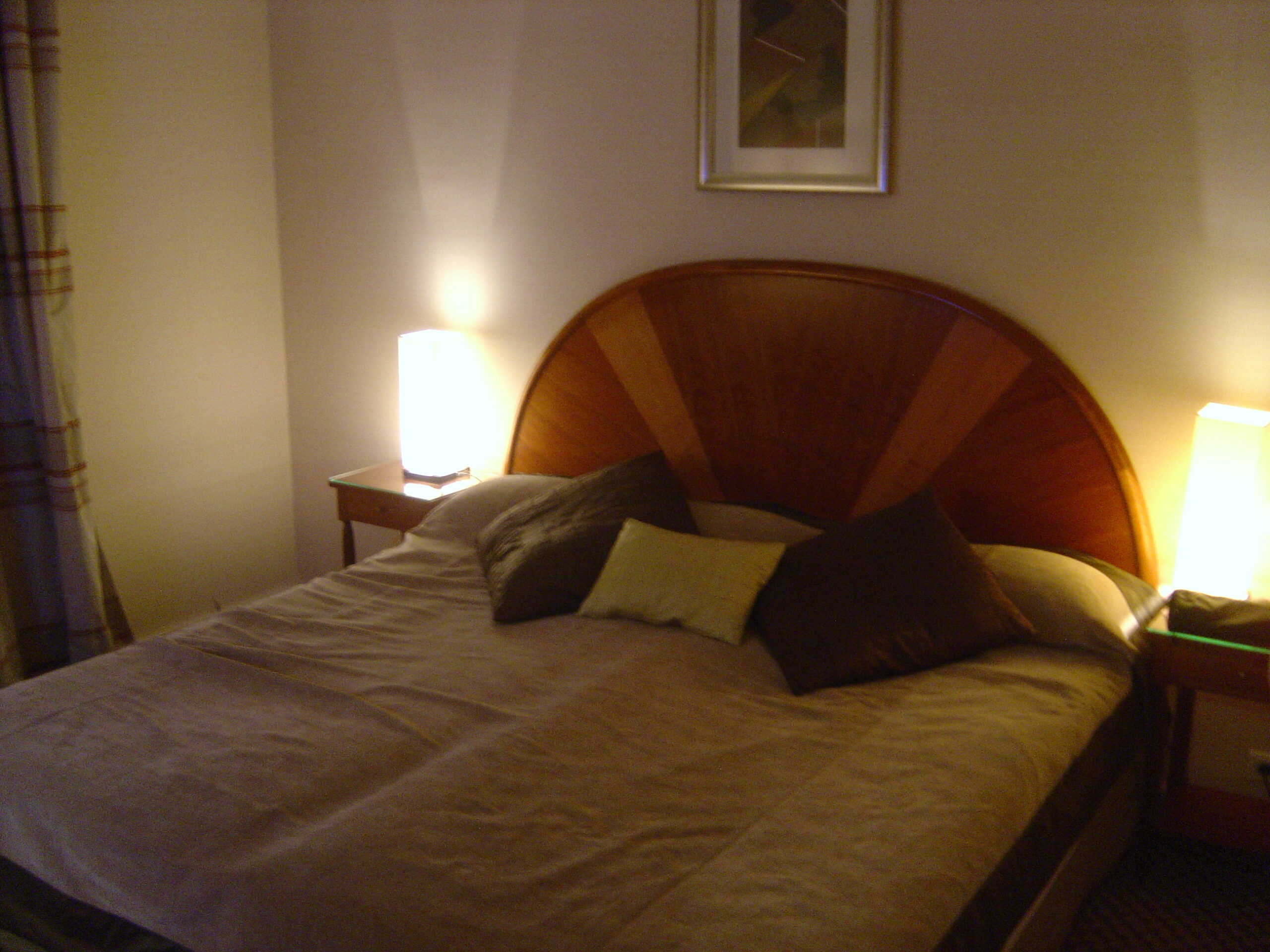
Sleep tourism is a term covering two entirely different things. One is travel for clinical sleep medicine, meaning assessment and treatment of disorders such as obstructive sleep apnoea, which involves diagnostic testing and long-term therapy. The other is a hospitality product: a hotel or resort stay built around sleep, with bedding, lighting, sound and sometimes a consultation included in the room rate. They share a word and nothing else, and the accreditation standards for the first make the distinction unusually easy to state.
What accreditation requires
The American Academy of Sleep Medicine operates a service-based accreditation scheme covering full-service sleep centres combining a sleep clinic with in-laboratory testing and home testing, practices focused on home testing, sleep clinics, durable medical equipment suppliers, and specialty practices. Its 2025 standards took effect on 1 January 2025 with a compliance deadline of 31 December 2025.[1]
The substance of those standards is worth setting out, because it describes what a clinical sleep service actually involves. Directors must be board-certified in sleep medicine by a recognised board, or have completed an accredited sleep medicine fellowship and passed the board examination within three years. Each location providing diagnostic services must have at least one registered sleep technologist present for 30 or more hours a week, with non-registered technologists required to complete accredited training and scoring personnel required to be registered or board-certified, and all diagnostic staff must complete 30 continuing education credits a year in sleep medicine.[2]
Beyond staffing, the standards require policies on privacy, on cardiopulmonary, neurologic, psychiatric and environmental emergencies with the equipment to match, on root cause analysis of adverse events, on infection control and on equipment maintenance, with a patient safety risk analysis updated every five years. Quality assurance requires sleep clinics to track one process measure and two outcome measures, with inter-scorer reliability assessed quarterly using twelve sleep studies a year, quarterly attestation by the network director, and records kept for five years. Patients prescribed positive airway pressure treatment must be offered a follow-up assessment within twelve weeks, including review of the device download for adherence and a documented subjective response.[2]
The accreditation term is not stated in the standards document consulted, and is not given here.
Where the hospitality product sits
A hotel sleep programme is not among the categories that scheme accredits. That is the accurate formulation, and it is more useful than the claim that such programmes are unaccredited, which no body has published. The accreditable categories are defined clinical service types; a hospitality product falls outside their scope by definition rather than by assessment.
The practical consequence for a traveller is straightforward. The requirements above, a board-certified director, registered technologists, quarterly scoring reliability and twelve-week therapy follow-up, describe what is being bought at one end of the term. At the other end, what is being bought is a room.
The condition behind the demand
Obstructive sleep apnoea is the disorder that drives most clinical sleep activity. A 2026 review states that approximately 936 million adults aged 30 to 69 worldwide are estimated to be affected, of whom about 425 million have moderate to severe disease, attributing the estimate to a 2019 analysis.[3] That figure is cited here at second hand, and the originating analysis is a modelled literature-based estimate rather than a measured population count. It is very widely quoted as though it were the latter.
No source located measures travel for sleep medicine or for sleep hospitality.
See also
- Wellness tourism, where the hospitality half of this term belongs
- Diagnostic tourism, sleep studies being among the tests it covers
- Medical spa tourism, the other category defined by sitting between two regimes
- Health screening abroad, for the wider question of clinical claims in a leisure setting
References
- American Academy of Sleep Medicine. Accreditation. Verified against primary record: accreditation programme page opened and read. Retrieved 30 September 2026.
- American Academy of Sleep Medicine. Standards for Accreditation. Updated January 2025, effective 1 January 2025. Verified against primary record: accreditation standards opened and read. Retrieved 30 September 2026.
- Frontiers in Medicine, 2026. Network meta-analysis of weight-loss diet, exercise, respiratory and oropharyngeal muscle training in obstructive sleep apnoea. Independently reported: the prevalence estimate is cited within this article to a 2019 analysis, which was not opened for this entry. Retrieved 30 September 2026.
Sourcing note: the accreditation programme page and the 2025 standards were opened and read on 30 September 2026. The prevalence estimate is cited at second hand and its originating analysis was not opened; it is a modelled literature-based estimate and is labelled as such. The position of hotel sleep programmes is described as falling outside the scope of the accreditable categories, which is what the source supports, rather than as a finding that such programmes lack accreditation, which no body has published. The accreditation term is omitted because the standards document consulted does not state it.